‘Wild Bill’ Belvin: A Year in the SW Florida Wild
In 1930, William T. “Wild Bill” Belvin walked into the undeveloped country along Charlotte Harbor and stayed there for a year. He carried no conventional survival gear, living without clothes or weapons, retaining only his spectacles and false teeth.
He hunted, fished, foraged and lived off the land in the mangrove and scrub country near Pine Island and what is now Cape Coral.
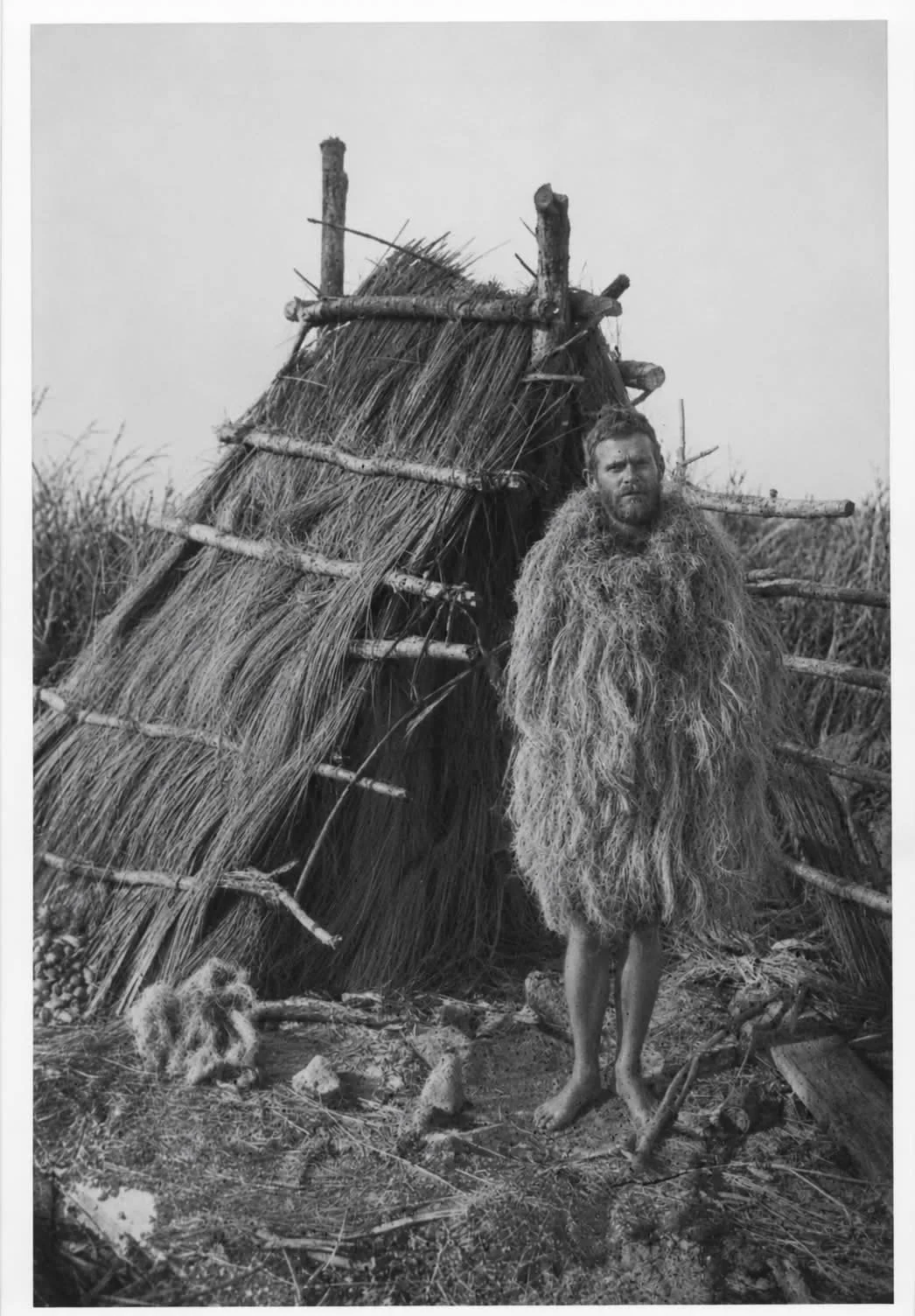
‘Wild Bill’ Belvin in 1930 standing in a ghillie suit in front of an A-frame style chickee hut during his survivalist year.
Belvin’s year in the woods attracted local press coverage and newspaper reporting throughout Georgia and other parts of the American Southeast.
His year living alone along Charlotte Harbor remained part of local lore for decades.
He survived largely on fish, oysters, native plants and whatever else he could obtain from the surrounding environment.
The Fort Myers News-Press returned to his story in 1954 with the wonderfully titled “Wild Bill Belvin is Adopting City Ways.”
After the wilderness episode that made him famous as “Wild Bill” Belvin, he kept experimenting with ways to live and work from Southwest Florida’s natural resources.
In 1932, while working with Punta Gorda Fish Company fishermen around Crow Key and Bull Key, Belvin devised a process for cooking and drying predatory fish and fish scraps into fish meal and fertilizer.
He developed a process for cooking and drying predatory fish and fish scraps into fish meal and fertilizer, then presented samples to the Fort Myers Chamber of Commerce. Researchers have found no evidence that the idea developed into a commercial operation. (Punta Gorda History Center Blog)
He presented samples to the Fort Myers Chamber of Commerce that November, although researchers have found no evidence that the project became a commercial operation.
A Growing Cape Coral
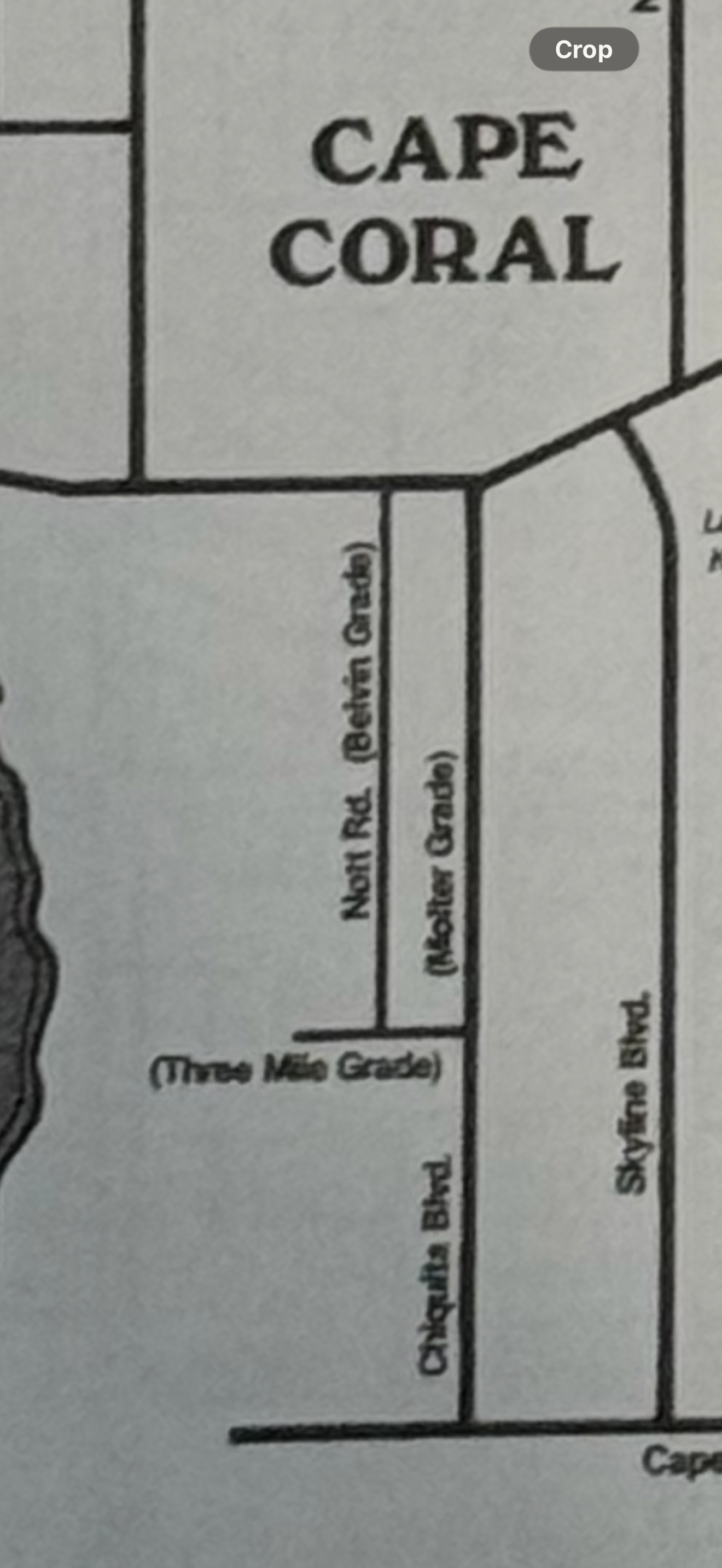
William Tyre Belvin (1876–1963) became the patriarch of the Southwest Florida Belvin family living on his 160-acre Fort Myers-area homestead patented from the federal government in 1929.
Image shows Nott Rd. (formerly Belvin Grade Rd.) and Molter Grade Rd. (now Chiquita Blvd.)
Belvin’s daughter Georgia described his first home there as a rough cabin resembling a Seminole chickee, with a thatched roof, log sides and sleeping platforms that folded against the walls.
He later built a two-room, tin-roofed house on stilts.
Portions of the original property eventually became Trafalgar Middle School and the site of Blessed Katharine Drexel Catholic Church.
Wild Bill’s return to civilization in 1931
His return to Fort Myers produced an ending worthy of the nickname "Wild Bill.”
Belvin walked back into town after twelve months and sat down for his first haircut and shave.
The clearest source is a syndicated newspaper photograph and story published in November 1931. It shows Belvin immediately after emerging from the woods, described as “grass-skirted and unshaven.”
The accompanying report says Lee County Sheriff F. B. Tippens arrested Belvin on a charge of stealing pelican eggs from a protected rookery and eating pelicans.
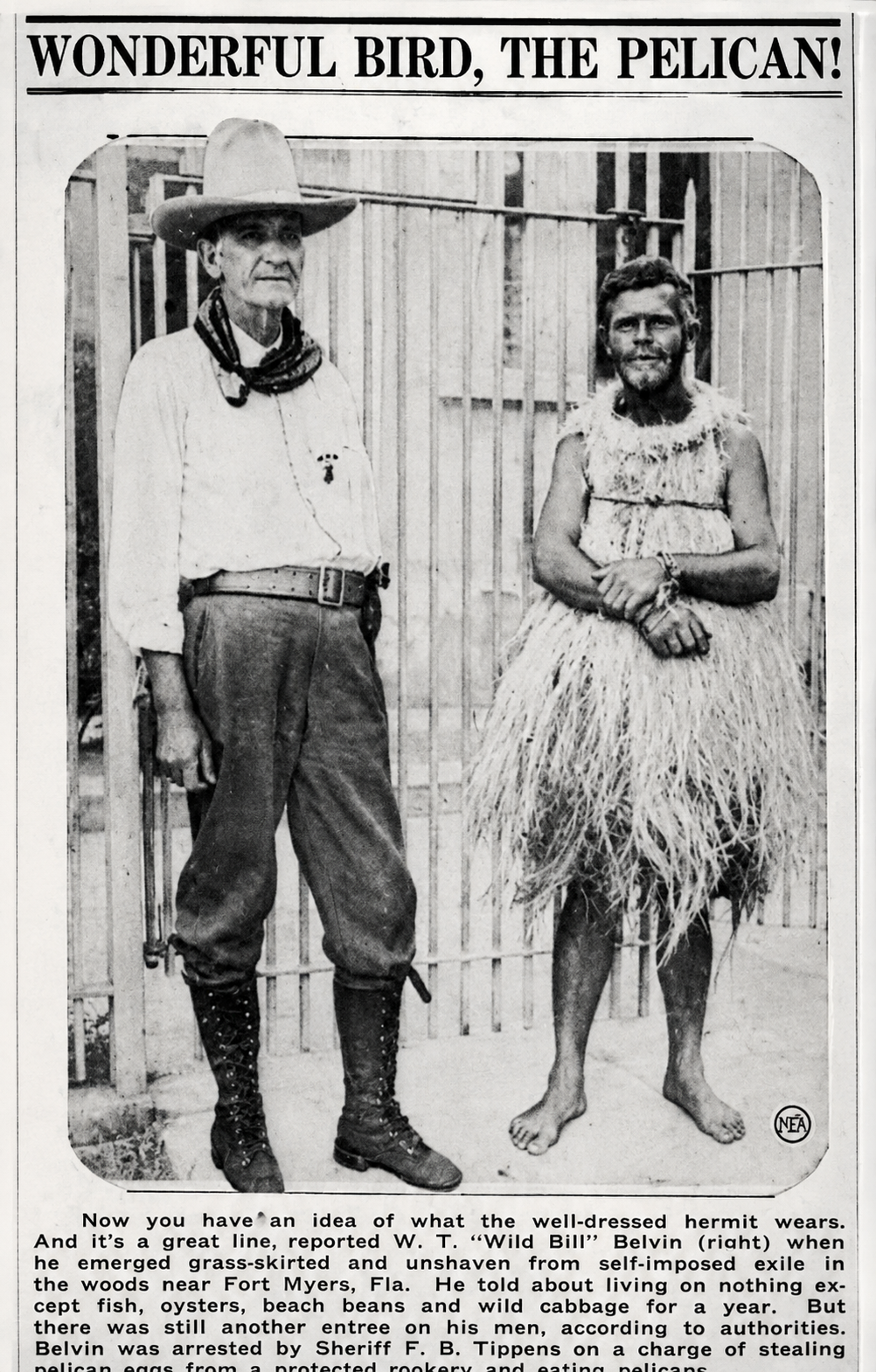
Image of Lee County Sheriff Frank B. Tippins standing beside William T. “Wild Bill” Belvin. Contemporary newspapers reported the charge, while a later Lee County Sheriff’s Office history described the arrest as “a gag” staged around the local celebrity’s return. I have found no evidence that Belvin received a conviction or fine.
Wildlife laws already limited what someone could legally take, even in comparatively remote Southwest Florida.
Before the barber could finish the transformation, a deputy arrested him.
A crowd had just welcomed him home, and Fort Myers had planned a banquet in his honor. The arrest postponed it. But there were no actual charges filed.
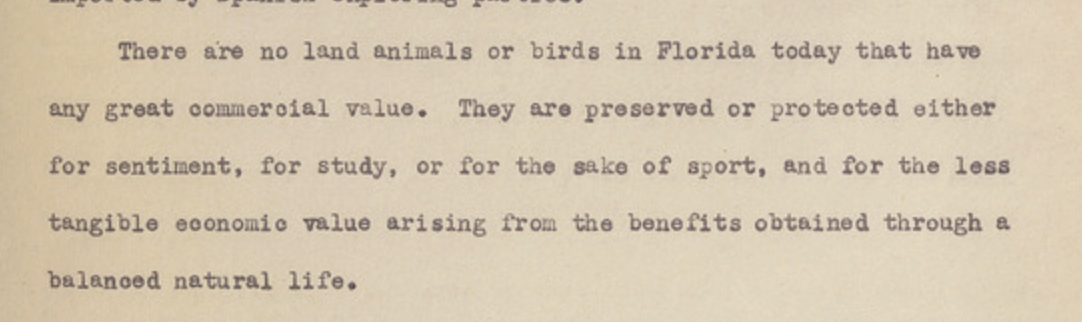
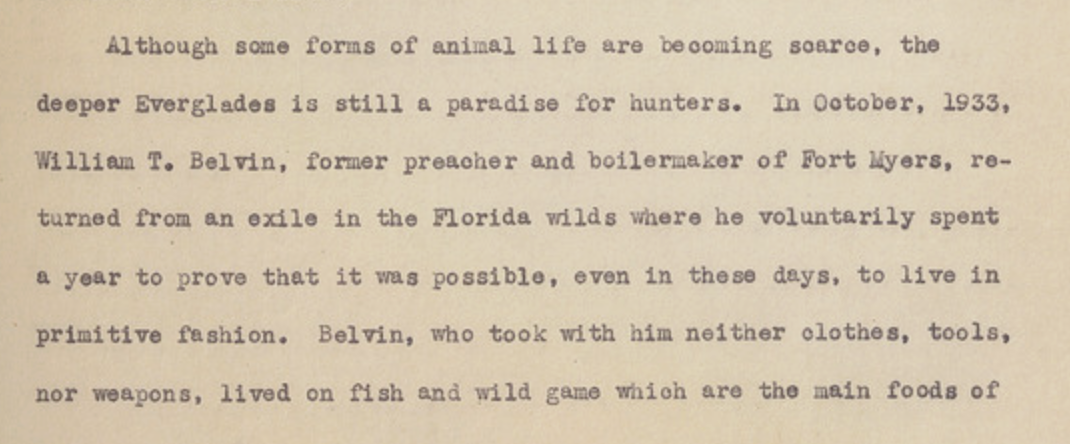

Image from the Florida Writers’ Project, 1940 — Guide to Greater Miami and Dade County. The guide misdates Belvin’s return (1931, not 1933) and wrongly relocates his episode to the “deeper Everglades”; it actually occurred northwest in the Pine Island–Charlotte Harbor area near today’s Cape Coral. The guide’s claims that wildlife had little commercial value and that Seminole foodways were simple are incorrect: Florida still supported a significant alligator‑hide trade, and Seminole hunting, fishing, farming, and culinary traditions were far more complex.
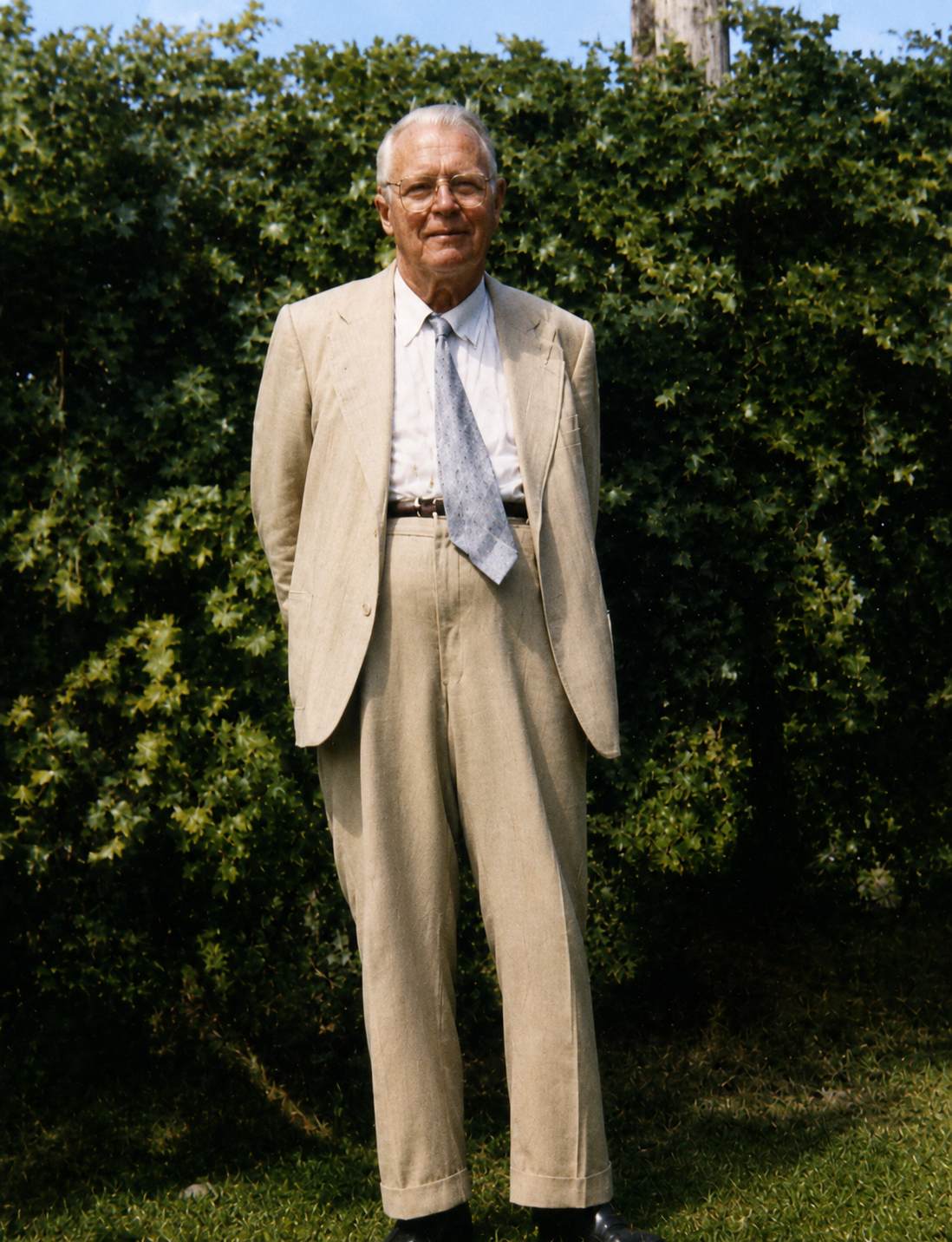
Image of William Tyre Belvin at his homestead in Ft. Myers, Florida prior to sale. Courtesy of Georgia Molter Macclean Family Archive. Image colorized using AI.
A Modern Tribute
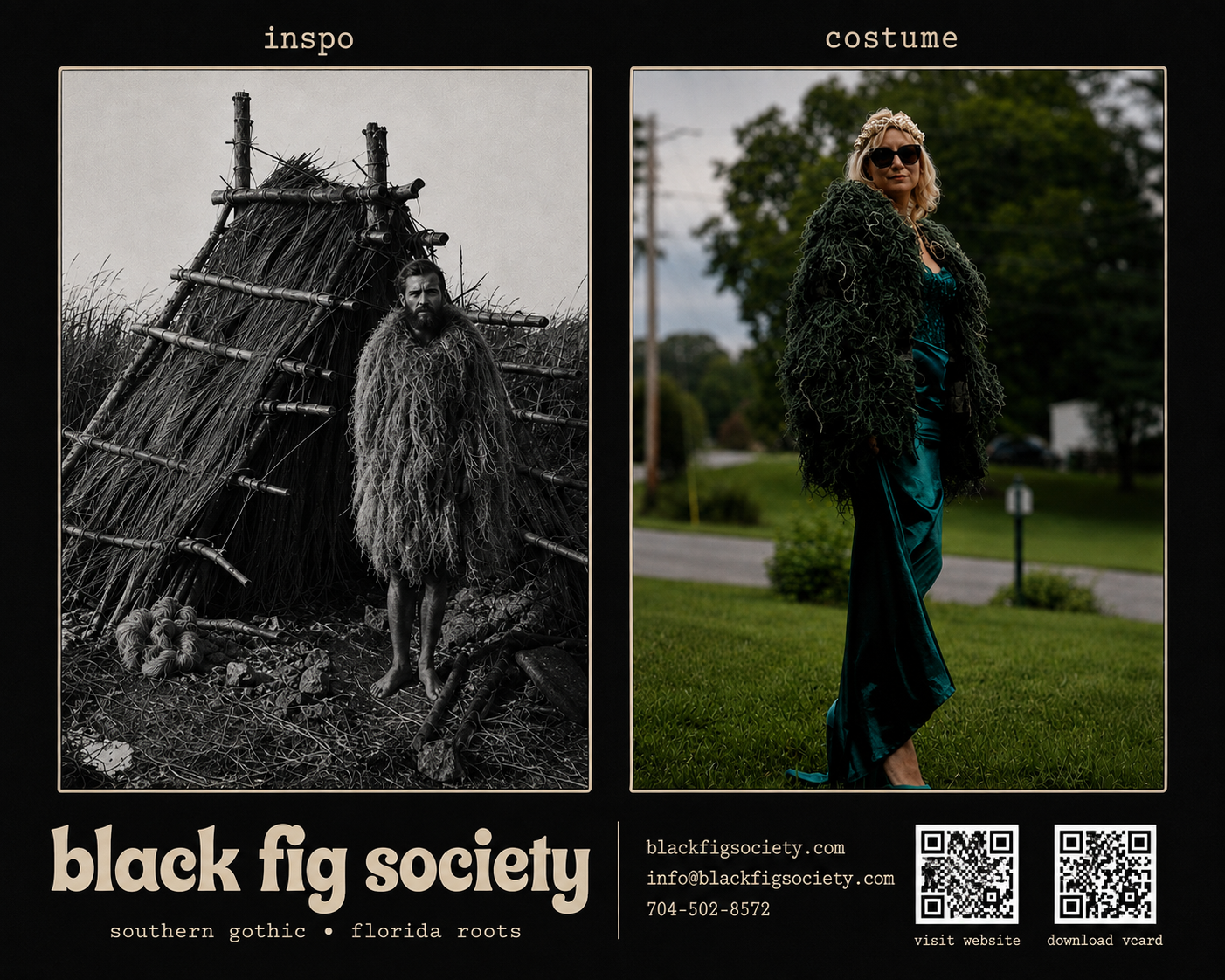
Wild Bill' Belvin in his ghillie suit in Pine Island around 1930s and my inspired “Miss Florida” costume, August 2026.
Nearly a 100 years later, I turned Wild Bill Belvin’s wilderness experiment into costuming for public appearances to promote real Florida histories and storytelling.
I built the look around a dark green ghillie-style coat, its dense hanging fibers recalling the scrub, grasses and tangled vegetation of the Southwest Florida landscape where Belvin spent his year in voluntary exile.
Rather than reproduce Belvin literally, I paired that deliberately wild silhouette with an upcycled emerald evening gown, rhinestone trim, vintage-style sunglasses and a handmade Florida shell crown assembled from shells, starfish and pearls.
The result turns the wilderness survivalist into a Florida beauty queen: part swamp, part pageant, part family history.
‘Miss Florida sash’
The final piece is a handmade “Miss Florida” sash, constructed from burlap and gold trim.
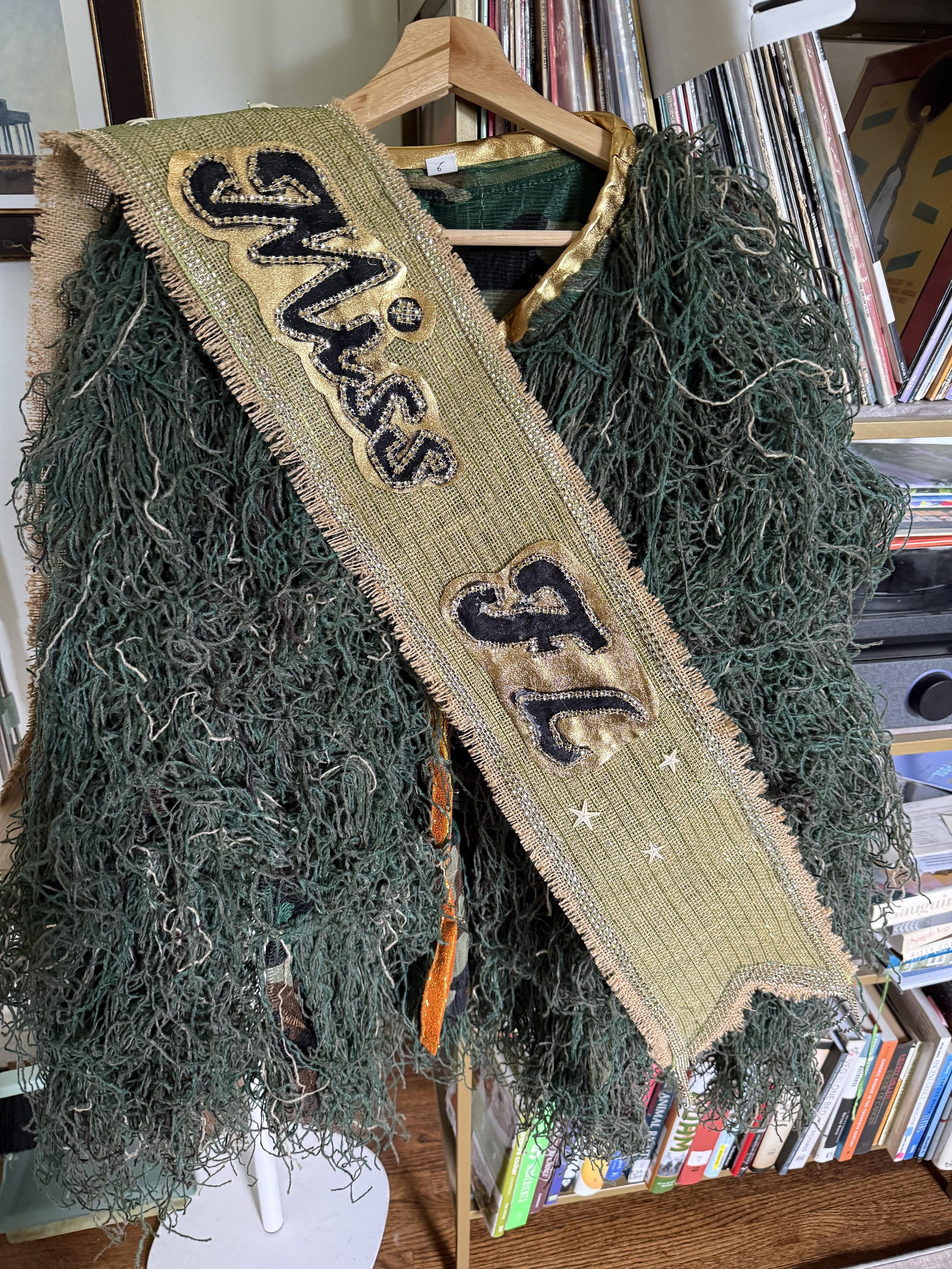
Image of ghillie suiting and “Miss Florida” satirical sash.
The contrast is intentional. Belvin became a local celebrity by presenting himself as a man who could conquer the Florida wilderness through individual ingenuity.
My costume avoids recreating a 1930s “pioneer” and plays with the idea of women on the frontier and what being a woman in Florida really meant.
The ghillie coat represents the lineage of time moving forward and the legacy left behind by the contradictions of development in modern Florida history.
For me, the reference is also personal. Wild Bill belongs to the extended Belvin-Molter-Smith family history connected to my grandmother.
Sources & attribution
Georgia Molter MacLean, Pine Island Road Girl, pp. 30–35, including the Belvin family history, family chart and reproduction of William T. Belvin’s 1929 federal homestead patent.
Prudy Taylor Board, Remembering Fort Myers: The City of Palms, including “The Saga of Wild Bill Belvin, 1930.” (Biggerbooks.com)
Punta Gorda History Center, research on Belvin’s 1932 fish-meal and fertilizer experiments on Charlotte Harbor. (Punta Gorda History Center Blog)
WGCU Public Media, “Wild Bill Belvin,” February 3, 2017. (WGCU News)
Florida Weekly, historical discussion of Belvin’s year living in the Gulf Coast wilderness. (UF Digital Collections)